
Topic starter
23/10/2011 2:56 pm
Hi all,
I have found the 1850 riverboat "California" on the Sacramento River in Butte County California. It was about 60 tons. This boat was a side wheeler and a modeled hull. It was Built in Maine, and worked the waters around NewberryPort Mass. Before it traveled to California in 1850.
Could this boat have only one smoke stack?
Any information would be helpful.
Thanks,
Dave Freeman

23/10/2011 9:37 pm
*RE: Str. CALIFORNIA, 1850*
HI, David & Steamboating vcolleagues:
Great find on your part out in California with the Str. CALIFORNIA. I don't know much but John Burns, son of Jim Burns who built the DK/DQ, mailed me old papers from his dad's collection. I see a notation for both the CALIFORNIA and SARA running between Haverhill and Newberry Port. No mention if there was one stack or two on the CALIFORNIA. Then I consulted McMullen's book 'PADDLE-WHEEL DAYS in California,' Stanford University Press, 1944, seeing a notation for specificarions. CALIFORNIA is recorded at 763.70 tons with EC meaning built on the East Coast.
With the discovery of gold at Sutter's Mill a big need arose for boats in those waters. East Coast steamboaters saw 'gold' for sure. Boats were boarded up, reinforced, loaded to the max with coal and steamed out and around Cape Horn. A number never made it, as to be expected, but the gamble was worth it. A boat could pay for itself in a matter of a few months. It took time for boat builders in California to build yards, mills and machine shops to meet the demand in what was a distant land and strange clime. Many such entrepreneurs made far, far more money building, running, repairing boats and engines than the vast majority of gold seekers. Ole Jim Burns himself later went north to the Alaska gold rush of 1898 working on steamboat engines himself and profited nicely by the venture. Other keen eyes and minds here may know or be able to find more about your CALIFORNIA. Send us more here on your discovery. Well, what do I know?
R. Dale Flick
Coal Haven Landing, Ohio River, Cincinnati.
Topic starter
24/10/2011 2:25 pm
Paddle Wheel days has the tonnage incorrect for the California. The correct tonnage was 63. In the Sacramento Business Directory from 1850 and a later one from 1853 the California is listed as 63 tons. Also in the book "Some Account of Steam Navigation in New England” (1929) has the tonnage as 63. The Paddle wheel Day listing may be a typo with a 7 hundred added to the front of correct entry.
She was about 90 -100 feet long. She is resting with the bow facing “downstream’ in the 1850 channel. I probed the area and the bow is about four feet deep and the stern is 12-13 feet deep. If the Sacramento River would drop a bit, ground water and the river level are the same, we might be able to dig at the bow.
The historical record stated that the boat was built with copper nails. When the California snagged on Aug. 1st 1850, Capt. E.C. Boober at the wheel, the local people came the next day and stripped the lumber off the upper deck and build a bar at the town of Monroeville. This bar later became the Colusi County Courthouse. I have also found this building site.
Dave Freeman

24/10/2011 3:48 pm
One smokestack
As to your question, yes it would have been possible to have just one smokestack - that was California or northwest style - see the DQ as an obvious example. Any photos of her predecessors and other NW boats show single stackers almost exclusively.
24/10/2011 4:30 pm
*RE: Str. CALIFORNIA tonnage*
Hi, Tom,
And KEEERECK you are on the tonnage variance for the CALIFORNIA. I checked in other sources finding your boat weight correct. These things happen in a number of the old records and I've found discrepencies in some dates here for steamers sailing from the East Coast at that time.
Your mention of the "copper nails"...used along with a building ashore interesting. Judy, Keith, Bob or somebody mentioned on this web a long time back RE: the number of still existing structures in NOLA, and along southern rivers, built from wood taken from flat and keel boats. Fresh cut timber didn't start coming down to California ports and yard from the Sierras and the Pacific Nortwest for a time. Have you found any relics from the CALIFORNIA or taken any photos? Keep us posted.
R. Dale Flick
Topic starter
25/10/2011 1:59 am
Here are three pictures of the riverboat site.
Dave Freeman
(I do not know why the this board puts Tom Adams as my name)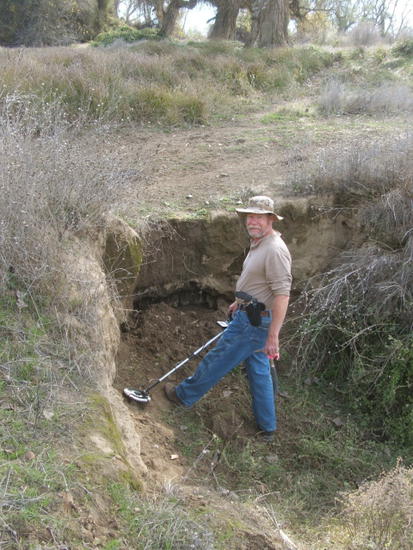
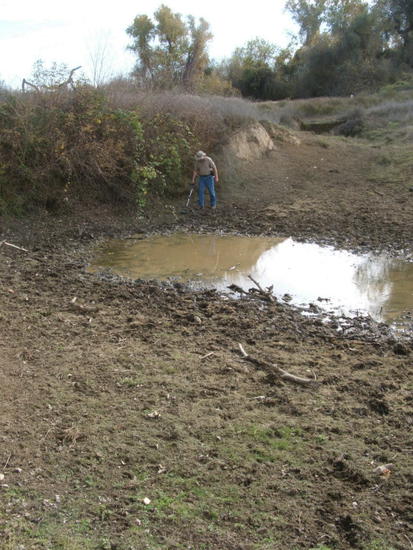


25/10/2011 7:42 pm
I would like to know how even one of those boats made it around Cape Horn, or even made it TO Cape Horn. Therin lies a tale.
26/10/2011 2:40 am
*RE: Cape Horn passage by ship*
Hi, Lexie,
The passage from New York to San Francisco then by clipper ship, steamboats and later steamships was some 7,800 to 7,900 miles depending on winds, currents. Fast sail clipper runs could be from 98 to 120 days more or less. Transiting Cape Horn/Terra del Fuego only in summer months in the southern hemisphere and dangerous even in the best of runs. Some ships stopped at Panama for the trek across to the Pacific; then aboard ships waiting there. Never mind many crossing Panama contracted Malaria and other diseases or were robbed. I've transited Panama also by the Panamian Railway and ship three times with thougths of what it was like then with heat, humidity, disease, encroaching jungles.
Sidwheelers were 'ify' at sea due to vulerability of the side wheels in rolling, pitching seas with one wheel up, the other buried with extreme stresses. Sea ice a sure death to sidewheels also. All navigation/plotting using charts, shooting the sun, observing the stars. Pefection of steam engines and the propellor on ships a plus. Several books [Don't have the titles at hand] focus on steamboats sailing from our East Coast on the sea route during the 1848 gold strike. For most a one way voyage for many who never returned back east remaining in California the remainder of their days.
When they struck gold in Alaska, 1898, the Howard Yards in Jeffersonville got in the boat bulding act with contracts for four wood hulled Yukon River packets. One interesting story with work crews from Howard traveling to Alaska. No doubt vital engines etc. sent by rail possibly. Loretta Howard told the story years ago and I didn't have a tape recorder. Three costing $25,000 and one boat smaller at $12,000. Big money in those days. The boats built on West Coast/California lines--not like packets back here. One interesting story not often told and I'm sure Keith knows more. Well, what do I know?
R. Dale Flick
Coal Haven Landing, Ohio River, Cincinnati.

26/10/2011 3:42 am
One interesting story tells of a steam strernwheel riverboat, the S. B. Wheeler, 120' long. being built alongside a Bark "Fanny" on the east coast. The steamer was finished, the Bark up to the deck. Fanny floated out to deeper water and sunk, the steamboat floated over the top of the Fanny, then the Fanny was refloated, decked, masted, and sailed to SF Bay. There the process was repeated, the Fanny sailed out the bay into history, The Wheeler went to work in CA.
Trivia galore!!
BTW, quite a few steamers did the east coast to SF Bay run, and remained in CA, or went north to the Washington or Alaska areas.
S'
David D.
26/10/2011 3:40 pm
One of the things on my fairly short bucket list is to sail around the Horn on a square rigger. (I don't mess around.) It will probably still be on my bucket list when I kick it. If you run across the titles of those books let me know.

26/10/2011 9:25 pm
Lexie Palmore;27795 wrote: One of the things on my fairly short bucket list is to sail around the Horn on a square rigger. (I don't mess around.) It will probably still be on my bucket list when I kick it. If you run across the titles of those books let me know.
I rounded the Horn on the QUEEN MARY 2, and from what I saw comfort and safety wise the QM2 has it over a square rigger. For sheer excitement though, I suspect that the square rigger is the way to go. 😉
27/10/2011 3:48 pm
No comfort and safety for me. Sailing on a square rigger is a real rush, and also really dangerous. But what a way to go.