
Topic starter
20/12/2015 1:05 am
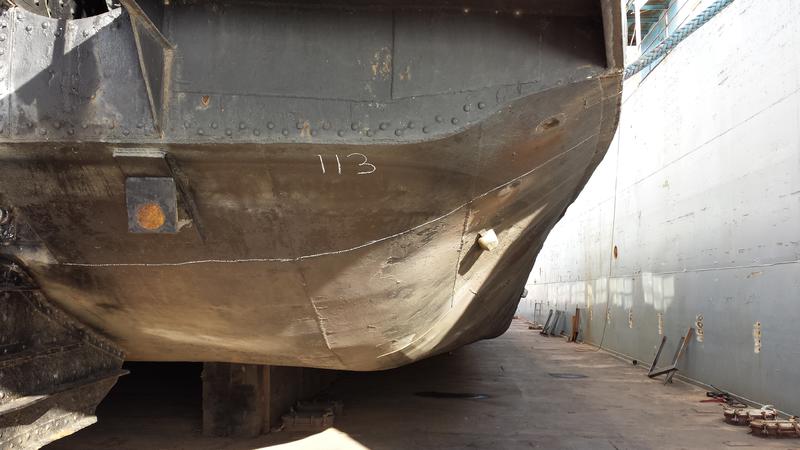
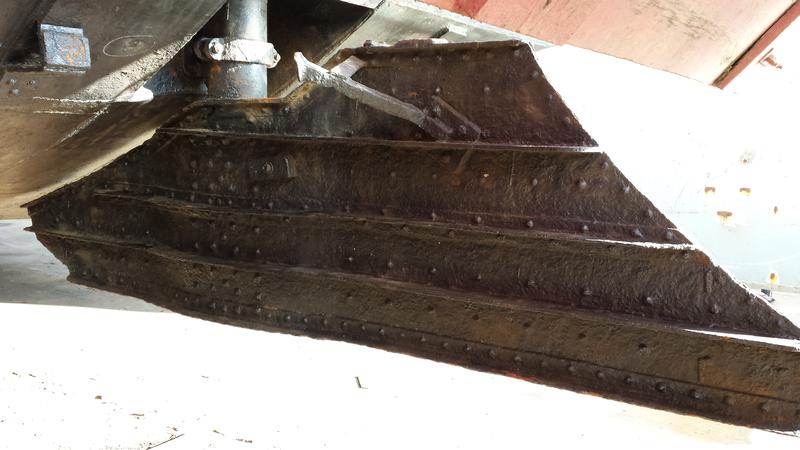
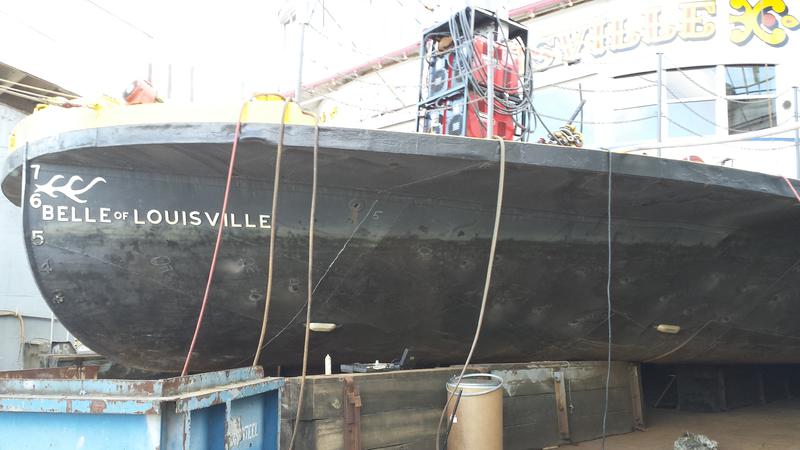
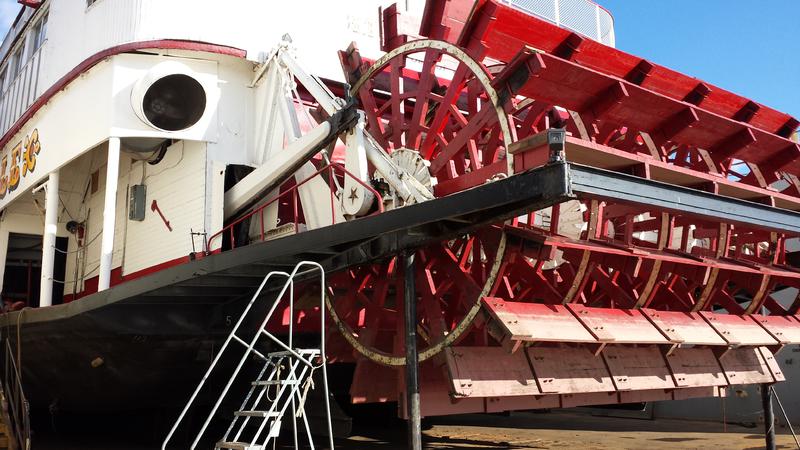
Since our arrival on the 10th at Jeffboat, the Belle's hull "check-up" has gone fairly smooth. The shipyard crew started "hot work" in less than a week, which is incredibly quick compared to the last few visits. For those unfamiliar, "hot work" means the shipyard can start replacing steel. Just to get to this point is a tedious, time consuming, and expensive process to determine if the boat is safe for the shipyard to start work. To make it short (and not bore anyone to tears), we have a company remove every drop of fuel from our main fuel bunker and piping, then thoroughly clean the bunker before we are taken to the dry dock. Once we are set on the dry dock, we pay a marine chemist (of which there are only a handful in the country qualified and handsomely paid) to climb through any and every space there could be work done to the hull to determine if all is safe for the shipyard crew to light a torch or use a welder. Before all of this, though, there was much planning and meeting (and crawling through bilges) to determine when, where, and how much work might be needed. Here are a few pics taken from the perspective of being "high and dry" on the dock. These may be familiar to some, so I apologize for the repetition. I took a few shots of the rudders and the stern. The outer two rudders still have much of their riveted construction, while the center rudder was replaced (in the 1950's if I remember Capt. Hawley's recollections correctly). The center rudder has an internal frame with a skin welded over top. The stern still maintains its original shape, with the hull contoured to give the rudders a tight clearance to it at any angle. In essence, this contour funnels water around the rudders for better steering. I tried to capture some of the Belle's stern "rake" to show the contours (unique to many Reese boats). It’s hard, though, to capture all of the dimensions to these contours in a photo. I’ve watched shipyard crew fit and weld steel to these shapes and it is no small feat, even for the most experienced!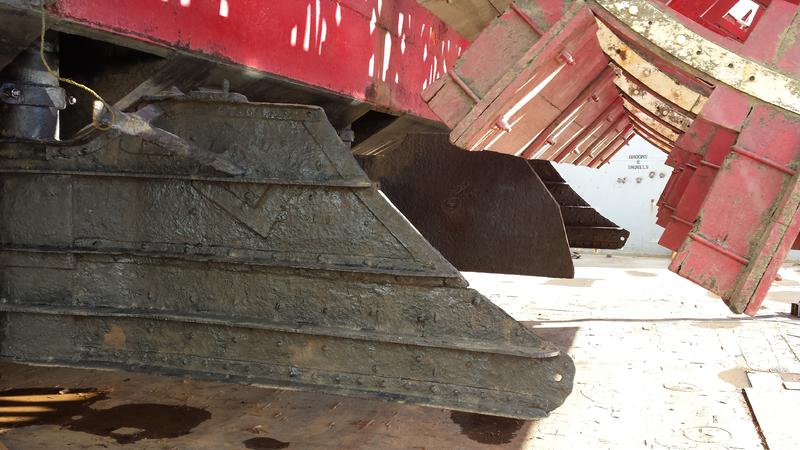

20/12/2015 2:58 am
Thanks for the raw views of a steamboat high and dry.
I wish I could walk around it and gawk.

20/12/2015 2:44 pm
Great shots and explanation!
Love those shots of the stern and rudders. The NATCHEZ likewise has 3 rudders, off the CLAIRTON, but they added a section to conform to her stern rake. Doc always said the DQ had the wrong number, 4, that 3 was perfect. So when they modified the DQ's stern, they changed the number but moved it to 2.... one of the highlights of my days working on the NATCHEZ was being able to go into the Zito drydock in January 1987 right after she was raised up. I had 2 cameras with to make sure I didn't miss a shot. Keep your pictures coming, Dan!
Topic starter
20/12/2015 4:03 pm
Here are a few more shots of the Belle's stern and bow. I tried to take a picture capturing the hull's contour around the rudders, but just couldn't get an angle to really show them. It's the only area of the original hull design that can be seen in the hull profile. It's a shame there's no photographic record showing her original hull profile before any changes were made--much more graceful lines with a wider guard. Her "new" bow is certainly worth appreciating, both in Alan's design and the craftsmanship of the shipyard crew that made it a reality.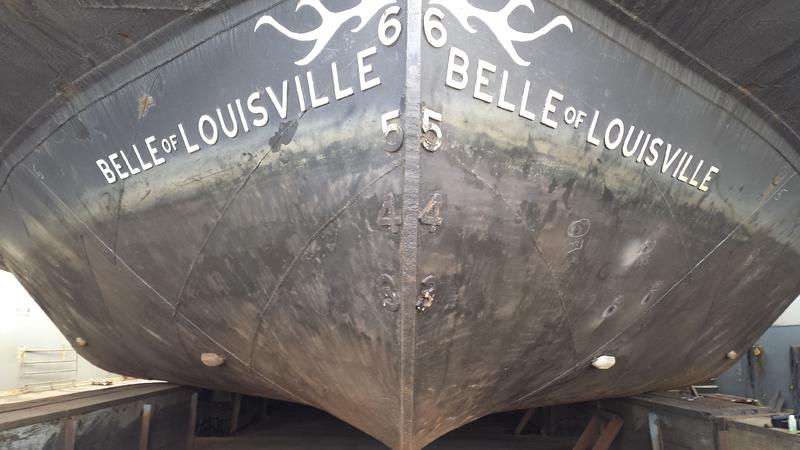
20/12/2015 5:05 pm
*BELLE'S five year hull ckeck-up/DQ's?*
Steamboating colleagues,
Dan, thanks for the in-depth, well written report on The BELLE's five year hull check-up in understandable technical detail. Great photos also to clarify. This kind of posting not only fascinating but vital to Steamboats.org. Also good to again have increasing news/information from and about the BELLE OF LOUISVILLE after more than a lapse in time after the management and former regime changed down there. And I have no doubt that this work is very, very expensive [$$$].
This all brings to mind if/when the sage DELTA QUEEN will be required to undergo her own periodic hull examination. I'd assume even the DQ, running or not, would be required to have such an examination, right? I recall this docking then for hull check was/is an every five year process as you state. For years this done at DRAVO up in Pittsburgh usually just after the boat returned to Cincinnati in the late autumn. The boat would steam up river here east of Dayton Bar in the early dark evening blowing several salute whistles to those they knew living up here in that area. It was haunting. The DQ would steam up to DRAVO with a skeleton crew along with a party of invited guests who pretty much fended for themselves with the cook house crew, few waiters serving. Foods in the refrigerators, freezers, storage rooms used up for the trip so all could be cleaned, sanitized. The trip up was direct with no landings other than locks that I remember. Towels, wash cloths, soap T-paper etc. piled on tables in the back lounge for people to pick up when needed. As you can imagine it was pretty much a floating house party all the way up. Once at DRAVO, all disembarqued prior to the DQ being pulled up on the marine ways. Again, I know what I don't know.
R. Dale Flick
Old Coal Haven Landing, Ohio River, Cincinnati
Topic starter
20/12/2015 9:49 pm
Dale,
I think a hull inspection for the DQ if she were not running (no COI) wouldn't be required because she would not be an inspected vessel--just as she was in Chattanooga. At that point it would be at the discretion of the owners to determine how often to inspect the hull. The W.P. Snyder and our wharf boat (Mayor Andrew Broaddus or Life Saving Station #10) are two obvious examples of such "uninspected" vessels. We usually pull our wharf boat out every 10 years. Of course there have many vessels that do not cruise but are inspected vessels, such as the casino boats all over our inland waterways. The closest casino (M/V Glory of Rome) to us, though, doesn't go out of the water for its hull inspection because it is too large for any dry dock within a reasonable distance. In this case, the Coast Guard will allow the hull to be inspected by a diver (a job I do not envy). An uninspected vessel, though, can still get visits from the Coast Guard for other reasons, such as checking to see compliance with EPA standards or (if you have food service equipment on board) compliance with FDA standards.
22/12/2015 12:06 am
Thanks Dan. Very interesting - even for someone like me - that only half understands some of what you're talking about. 😉
Topic starter
22/12/2015 1:26 am
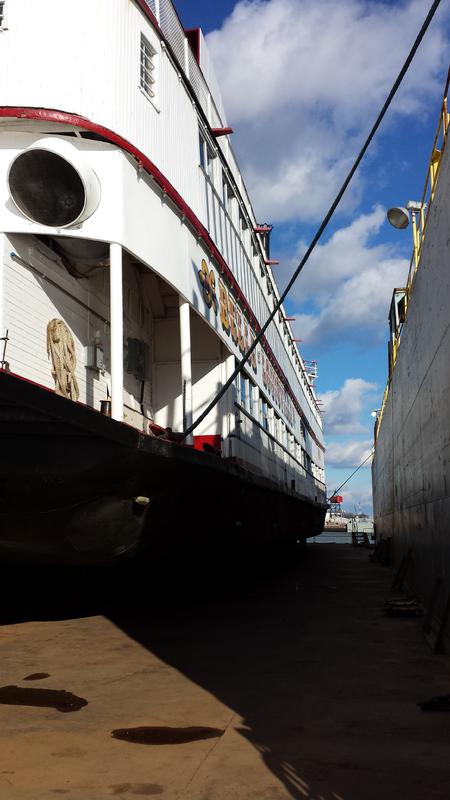
Just a few more shots I wasn't able to fit in yet--one is a close-up of the center rudder. As I mentioned in earlier posts, its has a much different look on the tail end. Also, I mentioned this has an internal frame skinned over. You may notice a few numbers I scribbled in chalk. These are thickness readings taken all over the hull with a ultrasonic thickness gauge--beats the "old days" when inspectors had to drill holes to determine thickness! The other shot shows something you normally do not see--anodes. You may be able to see one in this shot near the stern, half way up the side of the hull. There are several anodes welded to the side of the hull. Ours are blocks of magnesium--a metal well-suited to freshwater boats to handle electrolysis. These show very little wear and there is a very small amount of electrolysis, which has been the case in the last few shipyard visits. Much of this can be attributed to a significant improvement in the Belle's electrical system in 2004, preventing stray electrical currents from corroding the hull metal.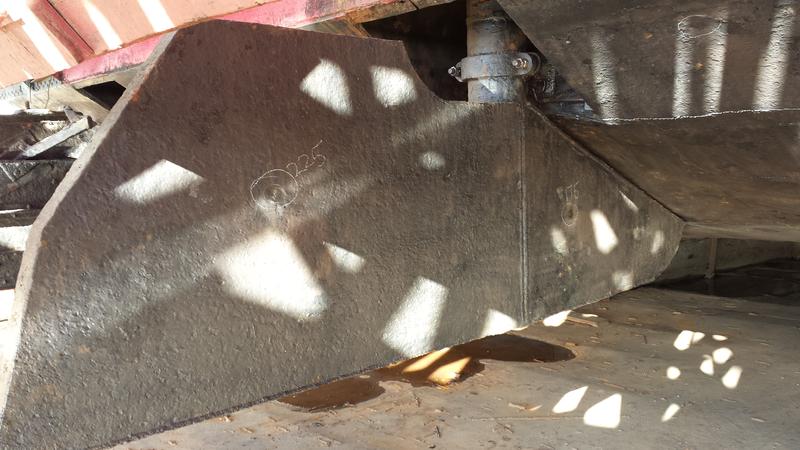

23/12/2015 3:22 am
Great photos and commentary, Dan. Thanks so much, and keep them coming!
Topic starter
09/01/2016 7:07 pm
Work in progress
Just thought I would send a shot of some of the work getting done since we went back onto the dock last Tuesday. As you see in the photo, we're not leaving the dock any time soon if they have to move the dock again! Fortunately, this is the biggest single piece being replaced and work is getting done at a steady pace. This photo shows the initial cuts to remove the steel. As you can see, this is a relatively flat section, so it won't give the fitters and welders too much trouble to fit the new piece. There is still considerable time, though, spent cleaning all the ribs before the new steel is fitted. I'll try to add another shot to show some of the original hull framing inside. Overall, her hull plate is looking pretty good. There is also hull framing to be replaced--only got 100 years out of some of this steel!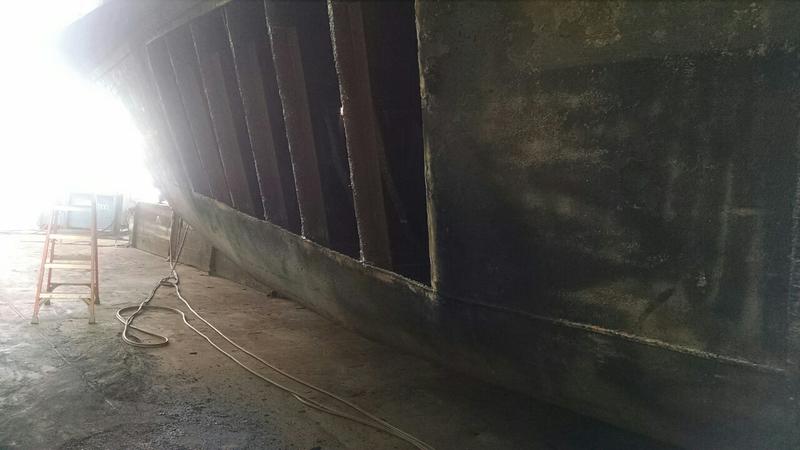
Topic starter
24/01/2016 4:26 pm
original steel
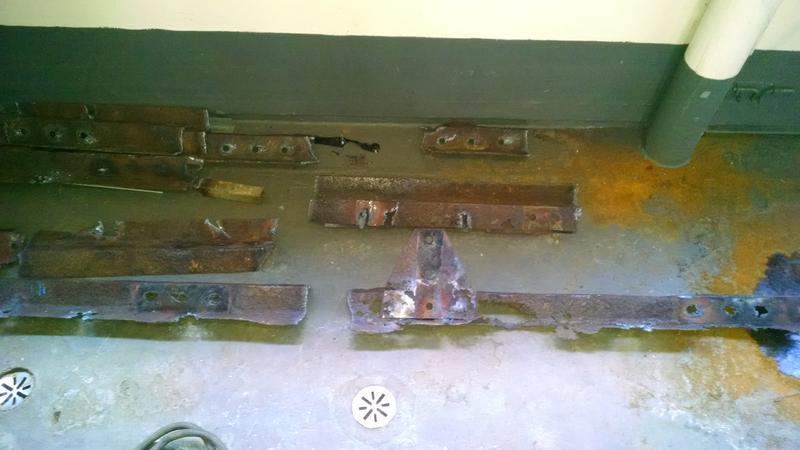
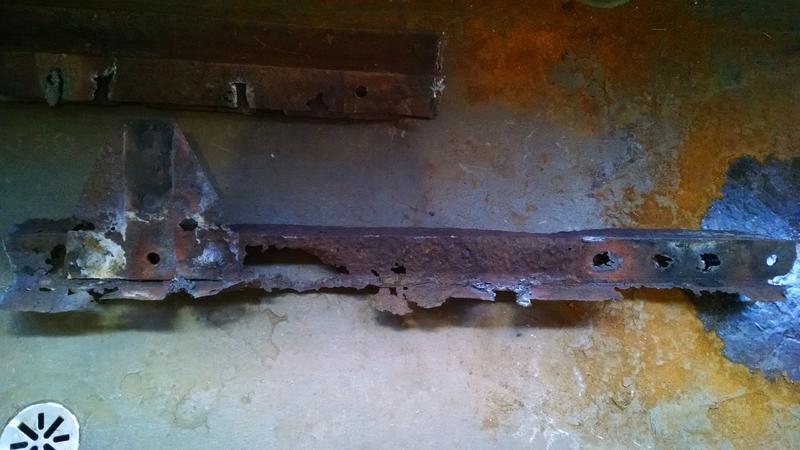
Here are a few more shots--the first one showing some of the Belle's original hull framework. The next few shots show some of her original hull truss work removed--notice the holes where the rivets were burned out for removal. I'd say we got our money's worth out of that steel after one hundred years, compliments of Jones & Laughlin Steel Company!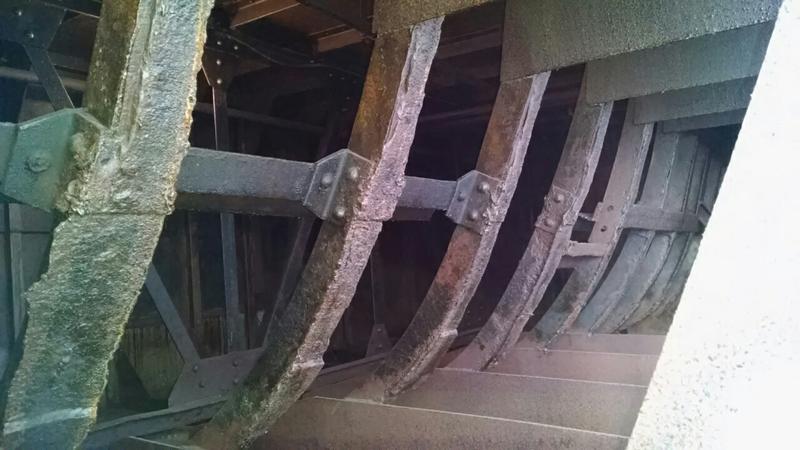
Topic starter
21/02/2016 6:44 pm
Coming down the home stretch!
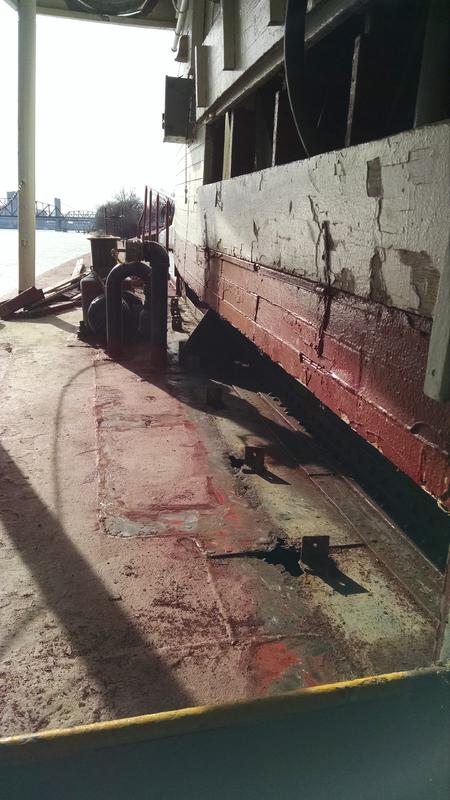
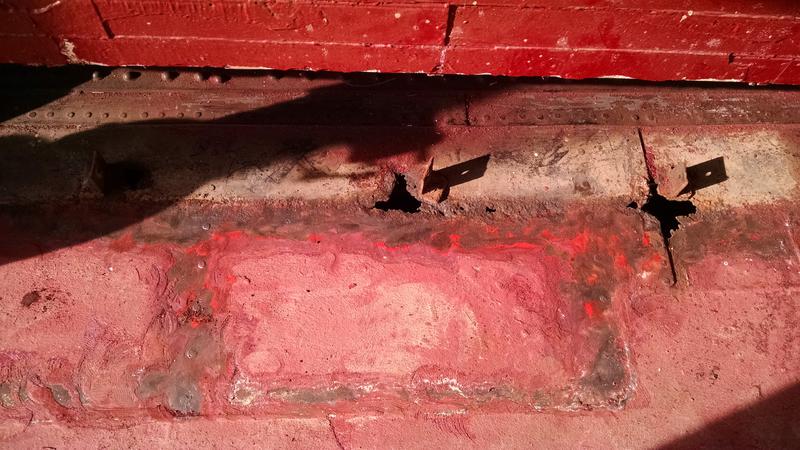
Here's one the last repairs before we leave the yard--deck plate on the starboard stern, directly underneath the wooden bulkhead along the main engine. The first few photos show the wood we had to clear away to give a safe distance for the yard to work on the steel. The last photo was an attempt to show what is the largest amount of deck plate left outside of what's underneath the main engines (decades of cylinder oil coating has kept it well preserved). Once again, I cleared away several decades of paint to discover this--completely covering any hint of riveting! Uncovering this much paint I think gives me some small sense of what an archaeologist experiences when digging through several layers of dirt! I think the second and third photo should give you an idea of why this repair is being done.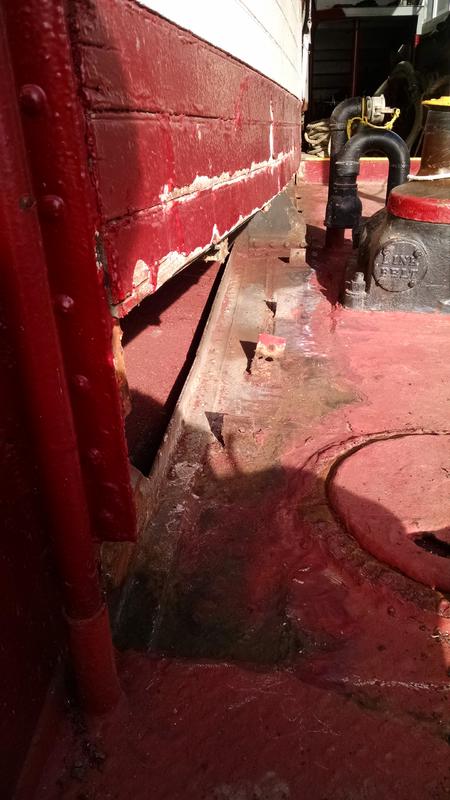
22/02/2016 4:07 am
Thanks! - Evertime I see this thread updated I think "Oh boy new pics!".
You don't see pics like this too much and I thank you for showing us the business parts of the Belle!
Topic starter
24/02/2016 12:48 am
Thanks Ron! My hope is just to show another aspect much of the public doesn't get to see--some of the tedium of maintaining a boat like this. I sometimes take for granted after so many years the "issues" we deal with on the Belle are almost non-existent in the marine industry. I've often thought of the Belle's operation as a "historical anachronism." I can also say at the moment the engine room and main deck certainly show the "ravages" of being through a shipyard--looking as "forlorn" as Alan Bates so aptly describes a steamboat sitting idle through the cold of winter. Add to that, though, the miles of welding leads and torch lines stretched across the main deck with the "haze" of welding smoke and burning steel during the height of the work day. Even though we were taken off the dry dock last Friday, we are still tied up at the yard to finish work "above the water line."
24/02/2016 2:25 pm
Yeah, for whatever reason this sort of stuff attracts me. Like walking around a ski resort in summer with the lifts sitting quietly dormant. You can almost hear the ghostly shouts of powder day delight on the wind.
No Ron, just you..... 🙂