
Topic starter
19/03/2011 2:09 pm
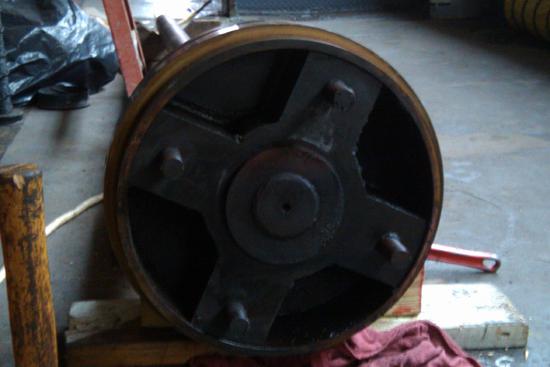
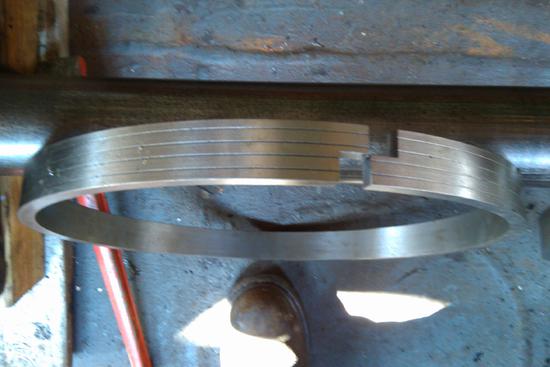
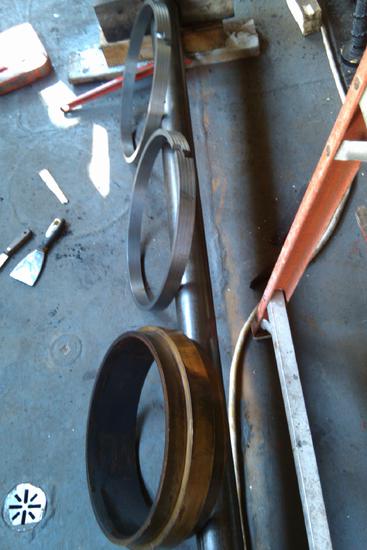
This winter one of our projects in the engine room has been to replace the piston rings. The port engine had developed a rumble over the last couple of seasons indicative of worn rings. Anyway, we recently got the new rings and decided to change them out this week. Instead of snapping the rings on (risk of distorting the rings with this method), we decided to disassemble the pistons. We started with the port piston, which you'll see in the pics has a brass collar. You'll notice the pic of the stbd. piston shows a different and much older construction (possibly original). I was told she had a piston "collapse" during one of her spring start-ups in the 1960s, so I would guess that to be the port piston. The collar on the stbd. piston looks to be steel and was much more challenging to remove. Anyway, the new rings are now on! This whole process of disassembling the piston was a new experience for me, so I snapped a few pics and will send them this way. Enjoy!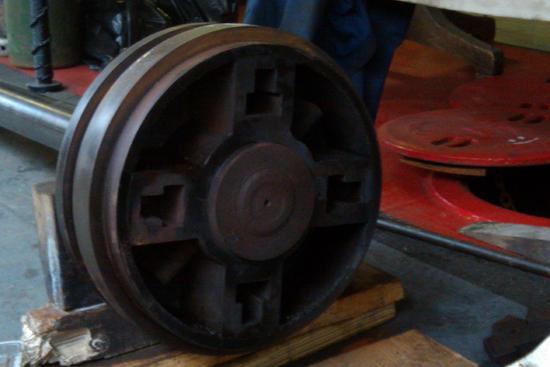

19/03/2011 2:42 pm
The piston head in the port cylinder was shattered by ice during the winter of 1964. On the day set for our trial run Dave Crecelius eased the throttle open, the wheel made part of a turn, there was a heavy "clunk" and everything stopped. We took off the head and flound a small pile of scrap-iron in the cylinder between the two plates. This was gathered up and taken to the W. R. Martin machine shop, where they made a new one. Martin also made new rings. In a couple of days we had it back in the cylinder, all trued-up, and ready to break in. I seem to recall that they rolled the wheel dead-slow for a day to allow the new rings to wear into shape.
I may be wrong about this. The Idlewild's engines were 16" diameter x 6.5' stroke. I seem to recall that we found they were almost 16 3/8" diameter and just a mite oval.
Topic starter
19/03/2011 4:44 pm
I can only imagine Chief Crecelius' feeling when he heard that "clunk"! Martin made our new rings this time as well. Their work on the piston has held up well! We also took measurements of the cylinders, but I haven't heard the results. This whole process has me curious as to the rig typically used to hone these cylinders.

19/03/2011 5:41 pm
I just got back from New Orleans, and the NATCHEZ had much of the same sort of work done on her starboard engine too. Her port engine gets the same treatment next year during lay-up.
Somewhere on You-Tube there is video of the NATCHEZ's starboard piston rod being pulled, but I haven't had time to find it yet.
Topic starter
20/03/2011 2:15 pm
Frank,
I did find some brief footage of the Natchez's engine work on You Tube under "Natchez engines." I'm anxious to hear the results of their work. Here's a few more pics of our ring replacement (port piston). As I mentioned earlier in the thread, the stbd. piston collar was much more challenging to remove due to it being steel instead of brass. It was a careful process of applying heat on the collar with pressure applied from a custom-made puller and a some carefully placed taps with a 4lb. hammer and wood blocks. In doing other engine work this winter, I've been impressed by how meticulous her builders were in labeling EVERY part. Even the simple sheet metal keepers to hold the bolts in the stbd. piston were carefully stamped.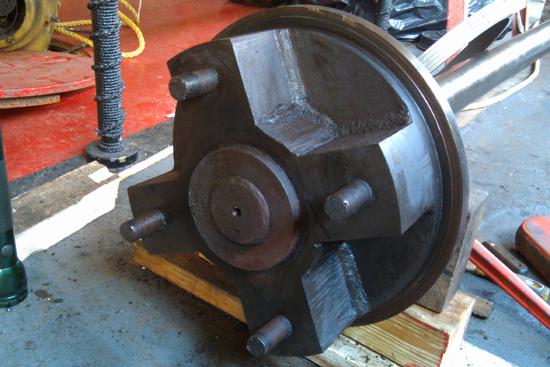

20/03/2011 3:24 pm
Great work! It's amazing that you and your crew are working so well with such 19th century technology and doing as well with it as the original mechanics had done. Thanks for taking care of "my" old boat that was a young 45 years of age when I started working on her at age 17. Much of my AVALON days were spent in the engineroom where I "handled" those ancient engines on a daily basis.
My understanding is that those engines were off another boat before they placed were on the IDLEWILD. Who knows where they came from?
20/03/2011 4:52 pm
I just found the footage on You Tube; it's under, "Rebuilding Str. NATCHEZ Steam Engine." It was posted by the younger Capt. Steve.
From all accounts everyone is pleased with the work done. I did notice that the grind that could be heard at times during the past few years was no longer present.

Topic starter
20/03/2011 11:35 pm
I've done my own digging on dating these engines and the earliest date I've seen is 1872 from an Idlewild inspection report we have. Who knows where that information came from, though. We also have a copy of a photo from the Murphy library collection that shows the Idlewild under construction and a burnt hulk tied alongside her, but the name of that hulk can't be seen. It's also an assumption that they were scrapping anything off of the hulk, anyway. It does scratch on my curiosity, though. As much as I've watched, listened, and handled these engines I still find something new to learn about them. I am grateful to add my name to a LONG list of crew members who have played their part in keeping these engines moving for another season.

02/04/2011 8:55 pm
Dan: I seem to remember that Reed Coen told me some years ago that he specified the rings on the Belle and that they were serving well. Don't remember the vendor...mebbe in Texas? What are the new rings mad of? Cast iron? Like you, I always worried when "stretching" cast iron ring to get them to pass over the land into the groove! Cap'n Walnut

03/04/2011 7:56 am
Funny, I actually just started this project today on the Chautauqua Belle (is there a reason everyone types in caps?). Jumped on here this evening, and saw this!
03/04/2011 12:21 pm
As I remember the old piston heads on the Belle, it was not necessary to stretch the rings over a land. Instead of a land there was a removable plate. The ring was sluud into place and the plate bolted on after it.

03/04/2011 12:57 pm
Capitalization
Mathew Stage;25277 wrote: Funny, I actually just started this project today on the Chautauqua Belle (is there a reason everyone types in caps?). Jumped on here this evening, and saw this!
I don't know if there is an official explanation, but it seems its always been done that way - F. Way capitalizes in his packet and towboat directories. I'd guess that it is similar to italicizing book titles. And since most boats had names of people or towns, this total capitalization differentiated the boat from the namesake.
Topic starter
04/04/2011 9:55 pm
I can't say off the top of my head exactly what the metal is for these new rings--have to check our file.
Topic starter
10/04/2011 1:32 pm
Sorry for the slow response, Tom. Our new rings are cast iron. We discovered the rings were slightly over-sized for the stbd. engine, so we carefully shaved some of the circumference off at the split. It wasn't really necessary for the port piston, though. We'll spend some time, maybe this next week, getting them worn in and checking our valves since lapping them in this winter. I'm looking forward to some peace and quiet from that port engine!
13/04/2011 1:02 am
Dan: THanks for the response...I figured it would take you some time. I put car compression rings in my little steam launch pistons and they are most certainly cast iron too. Some of the old time engineers I had heard would pien the worn rings to stretche the circumferance and grind some sharpness back into the edges when they could not get new rings. Donno how it worked, but better than none, methinks. Best of luck with the BOL engines...I feel they are in good hands. Cap'n Walnut.